Litter Cleanup
Grab a bucket, walk your own block, 30-45 minutes at a time. No meetings, no schedules — just neighbors keeping the gateway to Zilker Park clean.
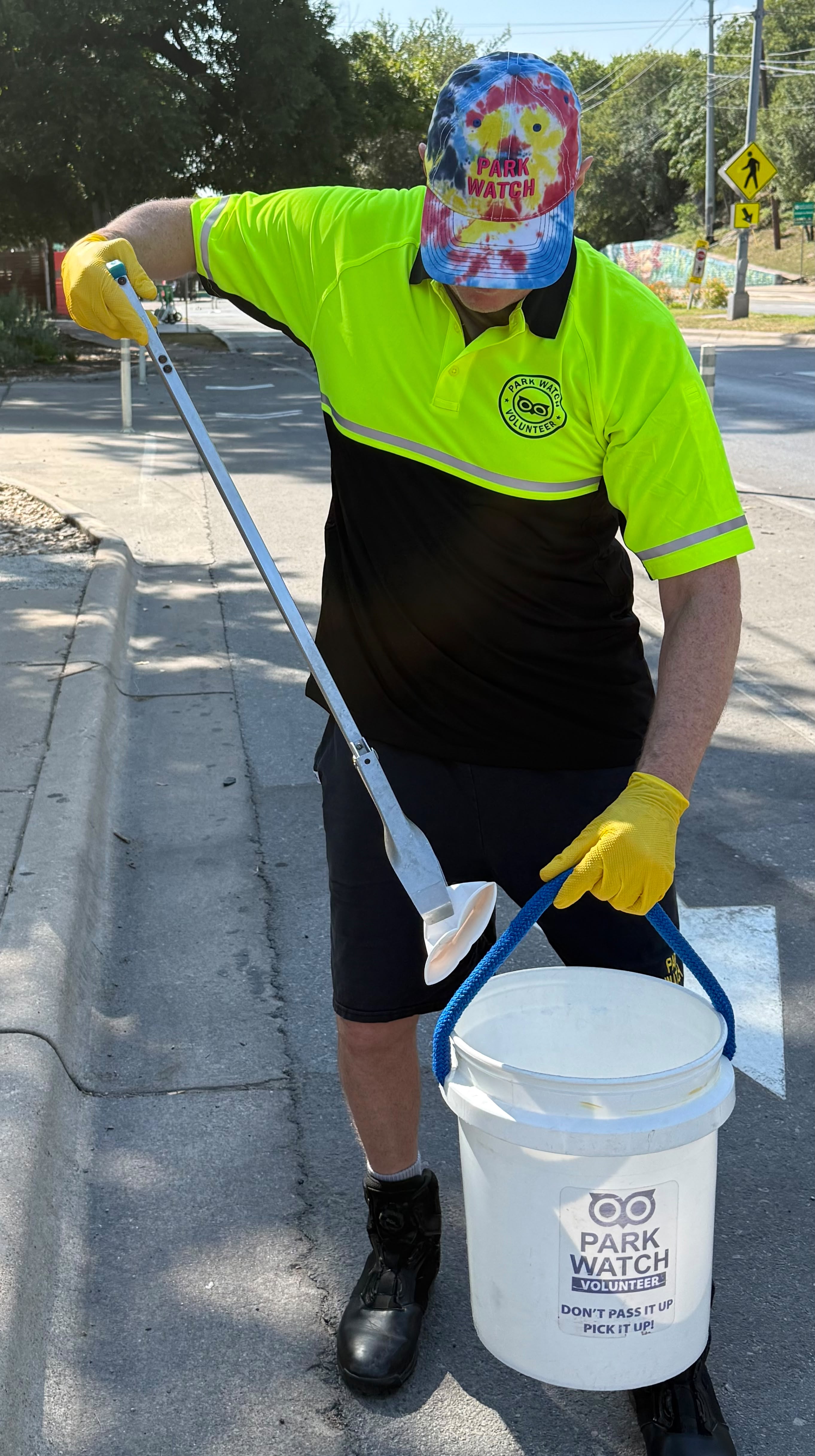
One volunteer, one block, one grabber.
A Corridor Sweep is exactly what it sounds like: pick a street you already walk — Barton Springs Rd, Toomey Rd, S Lamar Blvd — and clear the sidewalks, gutters and curb line as you go. No route captain, no shift to clock in for. Do it on your schedule, as often as you like.
What you'll need.
Grabber & bucket
Bring your own, or ask about borrowing a Park Watch grabber and bucket when you sign up — gear is provided when we have it on hand.
Gloves
Always wear gloves. You'll be handling broken glass, sharp cans and things you can't identify from a distance — don't pick anything up bare-handed.
Visibility
Stick to daylight hours and face traffic when you're near a roadway. A Park Watch shirt or bright colors help drivers see you from further away.
From your driveway to a cleaner block.
There's no signup sheet and no supervisor — just a simple loop you can repeat as often as you like.
-
01
Pick your corridor
Your own street, your building's block, or a stretch of Barton Springs Rd, Toomey Rd or S Lamar Blvd — anywhere in the East Zilker service area counts.
-
02
Grab your gear
Grabber, bucket or bag, and gloves. See "What you'll need" above if you're missing anything.
-
03
Walk & collect
Sidewalks, gutters, and the curb line — 30-45 minutes is a typical sweep. Longer or shorter is fine; this is self-guided.
-
04
Flag anything bigger
Dumped furniture, a large pile, or anything that needs more than one person — email Cleanup Dispatch and we'll help coordinate a pickup.
-
05
See something else? Report it.
Graffiti, a safety hazard, or something that looked off — log it on our Neighborhood Watch report form while you're out there.
Why the city can't do it alone.
Municipal crews are stretched thin and bins are limited by budget, not need. Neighbor-run sweeps fill the gap between scheduled city service and what a block actually needs day to day.
City crews can't be everywhere
Austin's public works crews are responsible for a huge network of streets and are scheduled on a rotation, not on demand — a block might wait weeks between visits. Neighbors on foot notice the same day.
Bins are a budget line, not a right
Every public trash bin the city installs has to be funded, placed and serviced on a schedule. Requesting one through bin@parkwatch.org helps us build the case for more of them — but sweeps don't wait on that process.
Join the Network
Two fields and a street. We'll send your kit details and add you to the neighborhood report list — nothing else.
- ✓No shifts, no minimum hours, no attendance tracking.
- ✓Volunteer solo, with your family, or with your building.
- ✓Questions? Call (512) 710-6753.
Litter cleanup, answered.
Why can't City workers pick up litter?
1. Limited Resources
Cities often have limited resources, including manpower, equipment, and budget, allocated for waste management and street cleaning. The extent of these services may be constrained by the available resources.
2. Vastness of Public Spaces
Public spaces in a city, including streets, parks, and other areas, can be extensive. Keeping all these areas consistently clean requires a significant effort. The sheer size of public spaces may make it challenging to provide frequent and comprehensive litter cleanup services.
3. Constant Generation of Litter
Litter is continually generated by various activities, such as pedestrian traffic, events, and public gatherings. Keeping up with the constant generation of litter can be difficult, and it may require frequent and ongoing efforts to maintain cleanliness.
4. Prioritization of Services
Cities often prioritize essential services based on public health and safety. While litter cleanup is important, other services like emergency response, road maintenance, and sanitation might take precedence, especially when resources are limited.
5. Need for Community Involvement
Keeping public spaces clean is not solely the responsibility of the city. Community involvement and responsible waste disposal by residents play a crucial role in maintaining cleanliness. Cities often rely on public cooperation and engagement to address littering issues effectively.
6. Environmental Concerns
Some litter may be hazardous or require specialized disposal methods. The city may need to follow specific protocols for handling and disposing of certain types of litter to ensure the safety of both workers and the environment.
While the City of Austin may face challenges in maintaining public spaces free of litter, it likely has programs and initiatives in place to address the issue. This may include public awareness campaigns, community cleanup events, and collaboration with local organizations to promote responsible waste disposal. If residents observe persistent litter issues in specific areas, they are encouraged to report them to the city’s public works or waste management department for appropriate action.
Why aren't there more trash bins in Austin?
1. Budget Constraints
Municipalities allocate their budgets based on various priorities, including public services, infrastructure, and safety. Budget constraints may limit the number of trash bins a city can afford to purchase, install, and maintain.
2. Resource Allocation
In addition to budget constraints, cities must allocate resources effectively. This includes not only the financial resources for purchasing bins but also the personnel for emptying and maintaining them regularly.
3. Balancing Aesthetics and Functionality
Cities often strive to balance the functional need for trash bins with the desire to maintain a visually appealing environment. While it’s essential to have enough bins for waste disposal, the city may also consider the aesthetic impact of placing too many bins in certain areas.
4. Behavioral Factors
The effectiveness of trash bins relies on the responsible behavior of the public. In areas where people are prone to littering or misuse of bins, having more bins may not necessarily solve the problem. Cities may need to focus on public education and awareness campaigns to encourage responsible waste disposal.
5. Logistical Challenges
Identifying suitable locations for trash bins, ensuring they are evenly distributed across the city, and addressing logistical challenges (such as accessibility for waste collection trucks) can complicate the process of increasing the number of bins.
6. Environmental Considerations
Some cities are increasingly focused on reducing waste and promoting recycling. In such cases, there may be a strategic decision to prioritize recycling bins over traditional trash bins. This shift aligns with broader sustainability goals but may result in fewer visible trash bins.
If residents feel there is a shortage of trash bins in their area, they can consider taking the following steps:
1. Contact the Local Government
Reach out to the local public works or waste management department to express concerns about the lack of trash bins in specific areas.
2. Community Initiatives
Explore community initiatives and programs that encourage responsible waste disposal and community cleanups.
3. Public Awareness
Participate in or support public awareness campaigns about responsible waste disposal to address the root cause of littering.
Cities often welcome feedback from residents and community engagement can play a crucial role in shaping waste management policies and infrastructure.
What's the safest way to pick up litter?
Safety is paramount when picking up litter, as there may be potential hazards such as sharp objects, broken glass, or hazardous materials. Here are some tips for ensuring the safest way to pick up litter:
1. Protective Gear
Gloves
Always wear sturdy gloves to protect your hands from sharp or contaminated objects. Choose gloves that provide adequate coverage.
Appropriate Clothing
Wear clothing that covers your arms and legs to protect against scratches or exposure to irritants. For daytime litter collection in and around public right of ways, we recommend wearing highly visible clothing.
2. Use Proper Tools
Litter Picker or Grabber
Use a litter picker tool or grabber to pick up items without direct contact. This helps avoid contact with potentially hazardous materials. Park Watch sells all-Aluminum 33″ Trash Gators ($25).
Trash Bags/Buckets
Use sturdy trash bags or 5-Gallon buckets for collecting litter. Choose bags that are large enough to accommodate the amount of litter you expect to collect. If you don’t like searching for the opening of a floppy trash bag every time you pick up a piece of litter, we recommend buying a 5 Gallon bucket. Park Watch sells one with a very comfortable rope handle and a bottom handle that makes it easy to empty ($25).
Work Light
For nighttime litter collection, we recommend you carry a Milwaukee M18 18-Volt 1250 Lumen Lithium Ion cordless searchlight.
Body Camera
When picking up by yourself, we recommend you use a body camera to recording your surroundings.
3. Be Aware of Hazards
Watch Your Step
Pay attention to your surroundings to avoid tripping hazards, uneven terrain, or potential dangers like traffic.
Identify Hazardous Materials
Be cautious of items that may be hazardous, such as broken glass, sharp objects, or potentially toxic substances. Handle these items carefully and consider using additional protective equipment if needed.
Report Hazardous Materials
If you come across hazardous materials that require specialized handling (e.g., chemicals or biohazardous waste), report them to the appropriate authorities and avoid direct contact.
4. Proper Handling
Avoid Direct Contact
Minimize direct contact with litter, especially if you are unsure of its contents. Use tools to handle items whenever possible.
Clean Hands
Wash your hands thoroughly or use hand sanitizer after handling litter.
Use Two Hands
When picking up larger items, use both hands to maintain better control and balance.
5. Dispose Properly
Separate Hazardous Materials
If you encounter hazardous materials, such as needles or chemicals, do not attempt to handle them without proper training. Report these items to local authorities.
Dispose of Sharps Safely
If you come across needles or other sharp objects, use a container with a lid for safe disposal. Do not attempt to pick up sharps with your hands.
6. Stay Hydrated and Take Breaks
Stay Hydrated
Drink plenty of water, especially if you are working in warm weather.
Take Breaks
Avoid overexertion by taking regular breaks to rest and rehydrate.
7. Work in Pairs or Groups
Buddy System
If possible, work with a partner or in a group. This ensures that someone is available to assist in case of an emergency.
8. Report safety concerns
Communication
Establish clear communication channels for reporting safety concerns or emergencies. Ensure that volunteers know to report issues promptly by emailing
support@parkwatch.org
By following these safety tips and taking precautions, you can contribute to a cleaner environment while minimizing the risk of injury or exposure to potential hazards during litter cleanup activities.
What are the physical requirements to volunteer?
Volunteering for litter cleanup typically doesn’t have stringent physical requirements, as many cleanup activities are designed to accommodate a wide range of participants. However, there are some general considerations to keep in mind:
1. Mobility
Litter cleanups often involve walking or standing for extended periods. While many cleanups take place in easily accessible areas, some may require walking on uneven terrain. Make sure you are comfortable with the level of mobility required for the specific cleanup site.
2. Bending and Stooping
Cleaning up litter may involve bending down to pick up items from the ground. If you have any physical limitations or concerns, it’s a good idea to check with Park Watch to ensure that the cleanup activities are manageable for you.
3. Lifting
While individual pieces of litter are usually not heavy, there may be instances where you need to lift bags of collected trash. If you have any back or lifting restrictions, let Park Watch know so we can provide assistance or assign tasks accordingly.
4. Weather Considerations
Be prepared for the weather conditions at the cleanup site. This may include being exposed to the sun, wind, rain, or cold temperatures. Dress appropriately, wear sunscreen, and bring water to stay hydrated.
5. Health Considerations
If you have any health concerns or medical conditions, it’s advisable to consult with your healthcare provider before participating in physical activities. Inform the organizers about any specific needs or accommodations you may require.
6. Safety Precautions
Wear appropriate footwear; use gloves to protect your hands; and being aware of potential hazards in the cleanup area, such as Poison Ivy
Can I volunteer with my dog?
While the idea of a volunteer picking up litter with their dog may seem like a positive and engaging activity, there are several factors to consider before deciding to bring your dog along with you for litter cleanup:
Dog Safety
Consider whether the environment where the litter cleanup is taking place is safe for your dog. Some areas may pose risks, such as broken glass or hazardous materials.
Dog Temperament/Behavior
Ensure that your dog is well-behaved and can be controlled in public spaces. A dog that is easily agitated or prone to aggressive behavior may not be suitable for a litter cleanup setting.
Hands-Free Leash
When you and your dog are in a public place, unless otherwise specified, the law requires your dog to be on a leash. Park Watch recommends attaching your dog’s leash to a belt to free up your hands for litter collection.
Dog Waste Management
When you and your dog are in a public place, the law requires you to carry proper waste disposal bags and to use them to clean up after your pet.
Impact on Cleanup Activities
Assess whether having your dog present will impact the effectiveness and focus of the litter cleanup. Some dogs may be a distraction, while others may actively participate in the activity.
Other Volunteer’s Health and Allergies
When at a group cleanup event, consider the health and potential allergies of other volunteers. Some individuals may be allergic to dogs and having a dog present could create discomfort for them.
Do volunteers represent Park Watch?
While volunteers may not be Park Watch employees or have a formal representation role, their actions and behaviors can influence the public’s perception of Park Watch and its mission.
Visibility and Recognition
Volunteers wearing Park Watch-branded clothing or using materials provided by the organization may be more visibly associated with Park Watch. This can contribute to the recognition of Park Watch’s efforts.
Behavior Reflects on the Nonprofit
The way volunteers conduct themselves during a litter cleanup reflects on Park Watch. Friendly, respectful, and responsible behavior enhances Park
Watch’s image.
Community Relations
Interactions between volunteers and the community during a cleanup can shape the community’s opinion of Park Watch. Positive interactions can strengthen community relations.
Adherence to Values
Volunteers should be aware of and adhere to Park Watch’s values and mission. This helps maintain consistency in messaging and actions.
Communication with the Public
Volunteers may engage with the public, answering questions or providing information aboutPark Watch’s goals. Clear communication is crucial to convey Park Watch’s mission accurately.
Safety and Ethical Considerations
Volunteers should prioritize safety, ethical conduct, and legal compliance during cleanup activities. Any violations can reflect poorly on Park Watch.
Representation Through Actions
While volunteers may not formally represent Park Watch, their actions speak volumes. A well-conducted cleanup reflects positively on Park Watch’s commitment to community service.
Training and Guidelines
Providing volunteers with training, guidelines, and expectations helps them understand their role and how their actions contribute to Park Watch’s objectives.
Park Watch clearly communicates with volunteers about expectations, guidelines, and our values. Volunteers should understand the impact of their actions on Park Watch’s reputation and community relations.
By fostering a sense of shared purpose and providing appropriate support and guidance, Park Watch ensures that their litter cleanup volunteers positively represent the organization and contribute to its positive public perception.
Pick a corridor. Grab a bucket.
It takes less time than a coffee run — and it's the fastest way to make your own block look cared for.